Learning Outcomes
i. Describe the life cycle of flowering plants, emphasizing the stages of sexual reproduction.
ii. Understand the processes of pollination, fertilization, and seed development in plants.
iii. Recognize the importance of these processes in the propagation and genetic diversity of plant species.
Detailed Descriptive Content
i. Life Cycle of Flowering Plants
Alternation of Generations: Flowering plants undergo a life cycle that includes an alternation between diploid (sporophyte) and haploid (gametophyte) generations.
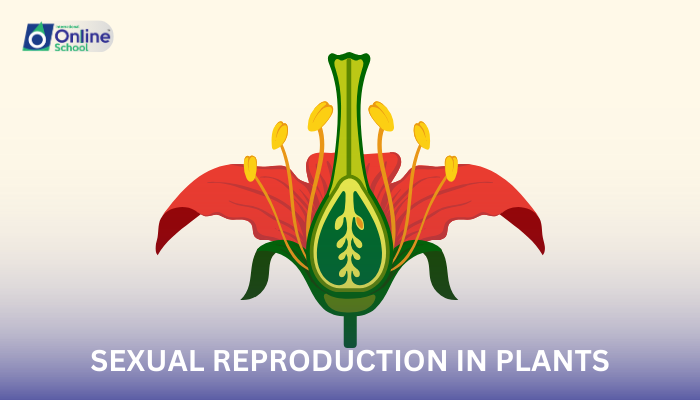
Flower Structure: The flower is the reproductive organ of the plant, with male parts (stamens) producing pollen and female parts (carpels) containing ovules.
ii. Pollination Process
Transfer of Pollen: Pollination is the transfer of pollen from an anther (male part) to a stigma (female part) of the same or another flower.
Agents of Pollination: This transfer can be mediated by wind, water, or animals, especially insects (entomophily) and birds (ornithophily).
iii. Fertilization and Seed Development
Fertilization: After pollination, pollen grains germinate on the stigma, growing a pollen tube down the style to reach the ovule, where fertilization occurs—the fusion of sperm and egg cells.
Seed Formation: Post-fertilization, the fertilized ovule develops into a seed, containing the embryonic plant (embryo), a food reserve (endosperm), and a protective coat (seed coat).
Importance of Sexual Reproduction in Plants
Genetic Diversity: Sexual reproduction in plants results in offspring with genetic variations due to the combination of different alleles, contributing to the genetic diversity within plant populations.
Species Propagation: The formation of seeds allows for the dispersal and propagation of plant species, which can occur over wide geographical areas.
In conclusion, sexual reproduction in flowering plants involves complex and interdependent processes that result in the production of seeds. These processes ensure the continuation and genetic diversity of plant species, which are fundamental to the resilience and evolution of plant populations. The study of plant reproduction is not only critical for understanding botanical science but also has direct implications for agriculture, horticulture, and conservation efforts.
